Image


Akimana Angelique's journey reflects the spirit of the International Year of the Woman Farmer, which recognizes the critical contributions of rural women to agriculture, food security, and community resilience. A few years ago, she never imagined that joining a savings group could transform her life. Like many rural women, she believed that producing enough food for her family was all that mattered. Saving money, borrowing to invest, or taking on leadership responsibilities seemed far removed from her daily reality. Today, however, she is a respected cooperative president, a community leader, and a successful entrepreneur. She is living proof that when women organize, learn together, and support one another, they become powerful agents of change.
Akimana, a mother of three from Kamana Village, Nyarure Cell, Munini Sector, joined the Joint Programme on Rural Women's Economic Empowerment (JP RWEE) in 2023. She became part of a women's group supported by the programme and facilitated by a community leader, where members received practical training on the Gender Action Learning System (GALS), goal-oriented savings, modern agriculture, and balanced nutrition. Although she was initially sceptical, she kept attending the sessions, even with little enthusiasm, believing they would bring little benefit to her family.
"We thought it was a waste of time. I lived here in the countryside without knowing anything about saving or borrowing. I knew nothing about gender equality or balanced nutrition. I believed that growing sweet potatoes and eating them was enough," Akimana recalls.
Finding her voice through collective action
As Akimana continued participating in the trainings and exchanging experiences with fellow group members, she began to see the value of what she was learning. Through GALS, Akimana and her husband learned to communicate better, make household decisions jointly, and share responsibilities more equally. Encouraged by her husband, she joined the village savings group, where her commitment quickly earned the trust of other members. They elected her as the group's chairperson, marking the beginning of a remarkable leadership journey.
Her confidence continued to grow through collective action. Fellow members later elected her as the first woman president of the Twungubumwe Nyarure Cooperative, demonstrating how inclusive producer organizations create opportunities for rural women to participate in governance and decision-making.
"I never imagined I would become a leader. Today I have confidence in myself and know that women also have a voice. I owe all of this to the JP RWEE training," she says proudly.
Her leadership extended beyond the cooperative. Recognizing her dedication and ability to inspire others, community members elected her to serve as the village official responsible for information. This role gave her an even stronger voice in local governance and community development.
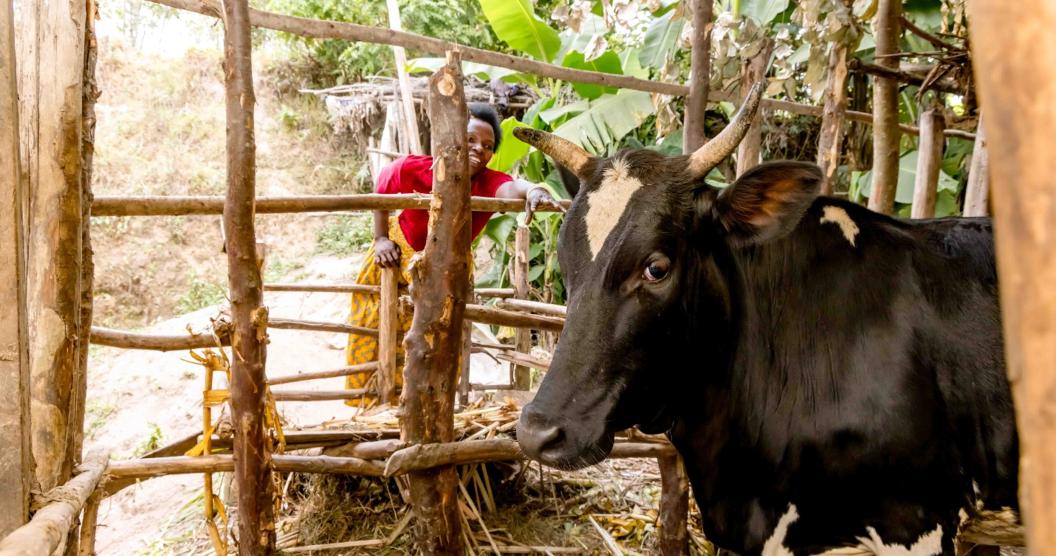
With better farming practices from the programme, Akimana and her family raised their yields and invested in land, sorghum, grafted avocado trees, and livestock. @FAO Rwanda/Christian Ngabonziza.
Turning savings into opportunity
The benefits of working collectively also strengthened Akimana's economic resilience. Using income generated from savings and cooperative shares, she invested in pig farming. The income from pig farming enabled her to further expand her livelihood activities. She purchased a sewing machine and established a small tailoring business, diversifying her sources of income. The combination of savings, entrepreneurship, and peer support enabled her family to steadily build financial security.
The transformation reached every aspect of family life. Before joining JP RWEE, Akimana admits she often disciplined her children harshly. Through GALS, she and her husband adopted a more positive approach, choosing dialogue and understanding instead of punishment. They now make parenting decisions together, creating a more supportive home environment.
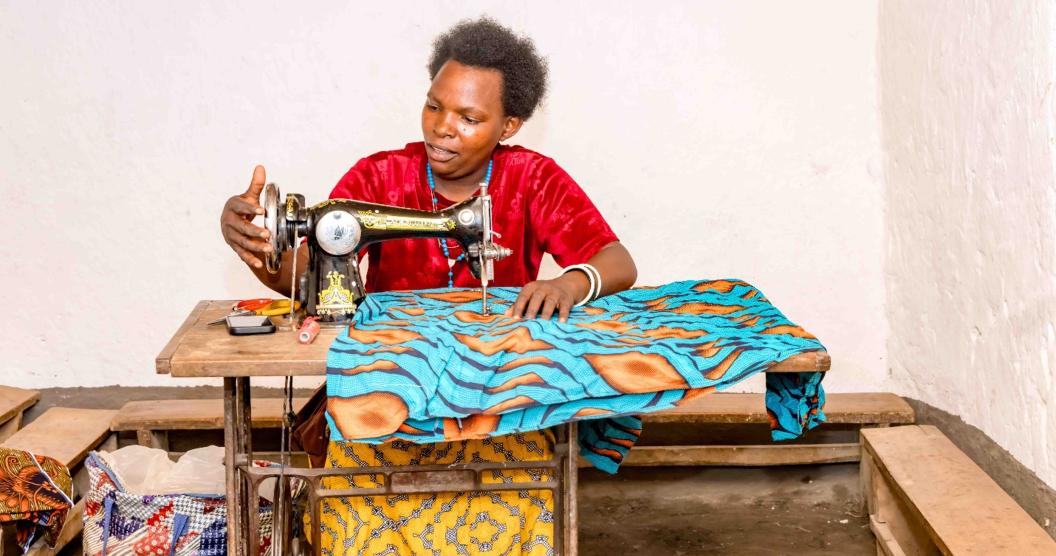
Akimana at a sewing machining she purchased with profits from pig farming. @FAO Rwanda/Christian Ngabonziza
Growing together through better farming and family cooperation
The household also embraced improved farming practices learned through the programme. They introduced soil conservation measures, planted crops separately instead of intercropping, and significantly increased yields. Better post-harvest management allowed the family to store food safely, ensuring year-round food security while preserving seed for future planting seasons.
Using income earned from farming and livestock production, along savings they build over time, the family purchased land worth RWF 450,000, where they now cultivate sorghum and grafted avocado trees. They have also expanded their livestock to include pigs, goats, and a dairy cow. Their children continue attending school, and the family consistently pays for community-based health insurance.
For Akimana, however, the greatest achievement is not the assets she has acquired but the confidence and agency she has gained.
"The greatest change was not money. It was my mindset. The knowledge I received changed my life and my family. I hope other rural women also receive these opportunities so they can believe in themselves and contribute to their communities."
Stronger together
Through participating in a savings group, taking on leadership roles within her cooperative, and serving her community, she has demonstrated that collective action does more than improve livelihoods. It strengthens women's confidence, amplifies their voices, and creates opportunities to influence decisions that shape their families and communities.
Today, Akimana is not only improving her own household but also inspiring other rural women to organize, lead, and invest in their futures. Her story is a powerful reminder that when women learn, save, and lead together, they build stronger families, stronger cooperatives, and stronger communities.