Image


In Tanzania's Chamwino District, Sara Msafiri earned a living selling the groundnuts and sorghum she grew until the adverse effects of climate change slowed production. After joining forces with other rural women facing similar problems, she transformed her livelihood by launching a salt production enterprise.
The group, Jitegemee, meaning 'sustain yourself', recognised Sara's leadership potential and elected her as its chairwoman. Their spirit and drive did not go unnoticed. The Joint Programme for Rural Women's Economic Empowerment (JP RWEE) partners, impressed by their resilience and determination, invited them to join its technical and vocational education and training sessions. There, they were equipped with the knowledge to diversify their product range, taking classes in soap production, batik artistry, and product packaging.
Three thousand five hundred rural women from 40 villages in the Chamwino District were invited to join the JP RWEE initiatives, designed to harness existing skills and expertise and boost their economic potential.
At the exhibitions, Sara connected with market traders from the Singida region who were interested in her range of products and practical marketing skills. Her efforts paid off shortly after, and she reported doubling her daily income.
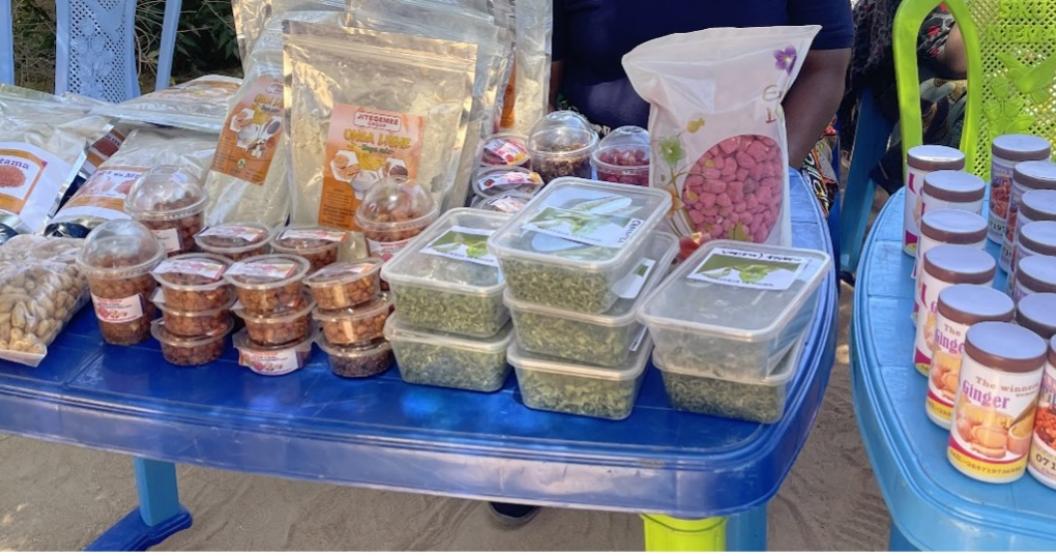
Different products by the Jitegemee Group, to which Sara belongs. These products range from salt, sorghum flour, groundnuts, and dried vegetables to flavoured baobab seeds, among others.
As Sara's business flourished, she always remembered her roots. Alongside managing a thriving enterprise selling salt, soap, batik, and oil products, she dedicated time to the Jitegemee members. She shared the skills and knowledge she acquired through her journey, inspiring them to believe in their own potential and strive for success.
She drew on lessons learned by participating in SASA! trainings, an evidence-based community mobilisation approach to prevent violence against women. Developed with a combination of theory, practice and relentless optimism, SASA! encourages communities around the world to personally and collectively use our power to create safe, violence-free communities for women.
SASA! means "now" in Kiswahili and is an acronym for the approach's four phases: Start, Awareness, Support, and Action. While SASA! has evolved over time, its core components remain consistent. It supports organisations and communities in exploring concepts of power, violence, and safety.
Looking forward, Sara is determined to expand her business further and is considering enrolling in additional courses in online marketing to broaden her product reach.