Image


Ramsakhi Kumari Ram, 30, a resident of Lokharam, Ward 5, Chinnamasta Rural Municipality, Nepal, was known in her village as a leader, a woman who spoke with confidence and inspired others. As president of the Radhakrishna Farmers Group, formed under the Rural Women’s Economic Empowerment Programme JP RWEE phase II, she empowered rural women to take charge of their futures. But behind closed doors, she faces a different reality – one of financial hardship, emotional turmoil and a household weighed down by her husband’s alcoholism.
Mahesh Kumar Ram, 39, her husband, was once a proud provider. He ran a musical band and a tailoring business, earning a decent income. Yet, most of his earnings never reached his family. Instead, they disappeared into alcohol and socializing, leaving Ramsakhi to struggle alone to feed their children, pay for their education, and keep the household afloat.
Whenever Ramsakhi sought money for their children’s education and household needs, Mahesh reacted with anger, sometimes resorting to violence. In desperation, she occasionally took money from his pockets—only to face further abuse when he found out. Despite these hardships, she persevered, leasing land to grow crops, working as a daily laborer in the off-season, and trading goods across the border in Rajbiraj to support her children.
The village often whispered about her struggles. “How much Ramsakhi suffers, even though her husband earns well,” people would say. Others mocked her leadership: “Why does a drunkard’s wife act like she knows so much?” But she refused to let their words define her.
The change came when SAPPRO Nepal (Support Activities for Poor Producers of Nepal) introduced the Gender Action Learning System (GALS) training to the community. When no one else volunteered, Ramsakhi stepped forward. Determined to find solutions, she arranged for her sister-in-law to care for her children and traveled to Lahan for a six-day intensive training in goal-setting, financial planning, gender equality, and family management strategies.
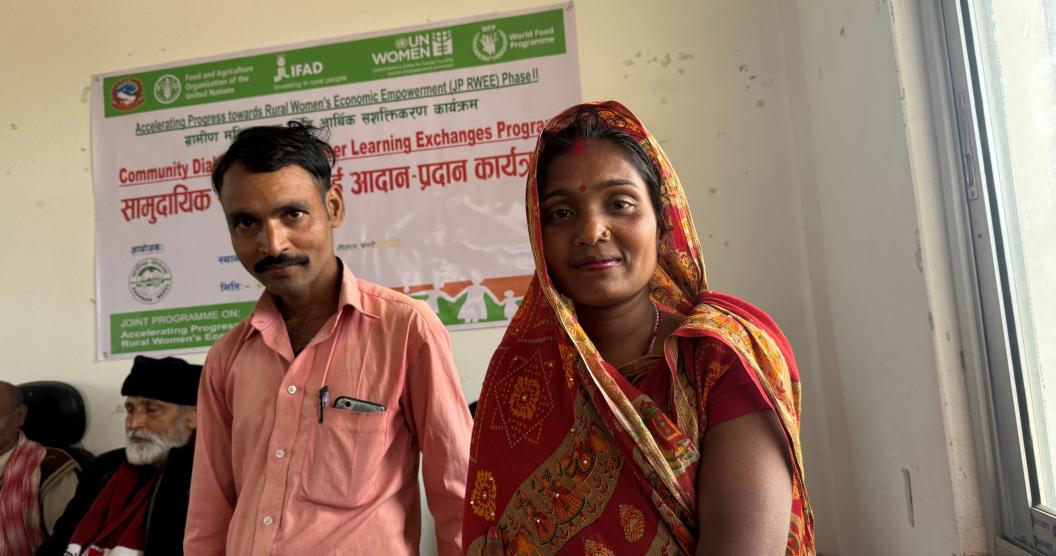
Returning home, she applied what she had learned with patience and persistence. Instead of confronting Mahesh in frustration, she spoke to him in the mornings when he was sober, using visual tools and stories to engage him. Slowly, he began to listen.
“I had never realized how much my wife knew,” Mahesh later admitted. As they talked more, he started seeing his role in the family differently.
Over time, Mahesh’s perception of masculinity evolved. He started discussing finances with Ramsakhi and took an active role in budgeting, recognizing that financial responsibility was a shared duty, not just a woman’s burden.
“Working alongside my wife has made my work more enjoyable. If it weren’t for her efforts to change me, our family would have fallen apart,” Mahesh confessed.
With support from the programme, Mahesh reduced his alcohol consumption, realizing its toll on their family’s well-being. As their financial stability improved, Ramsakhi began saving NPR 1,000 (USD 7,25) per month at Mahuli Microfinance and invested in a calf, anticipating future income growth.
Beyond their home, Ramsakhi used GALS tools to mentor 16 other women in financial literacy and leadership. At first, many men were skeptical, but as Ramsakhi demonstrated practical financial planning and tracking expenses, they started attending discussions and participating in decision-making.
“The transformation was possible because men engaged in the process,” she reflected. “When they acknowledge women’s financial knowledge, conflicts decrease, and families thrive.”
Today, their home is no longer a place of conflict but of partnership. When Ramsakhi fell ill with a neurological condition, Mahesh took over household responsibilities —preparing meals, managing expenses and taking extra tailoring jobs to cover her medical costs.
"I never imagined my husband would one day care for me like this," Ramsakhi shared with teary eyes.
Even the same people who once mocked her now look up to her as a leader and a role model for both women and men. Reflecting on his journey, Mahesh proudly says:
"I used to believe that men should control the household, but I see now that true strength is in supporting and respecting one another."
Ramsakhi, with tears of joy, adds:
"Until yesterday, I believed love and happiness from my husband were not meant for me. But today, the changes that GALS brought to both of us have transformed my life and household wellbeing."
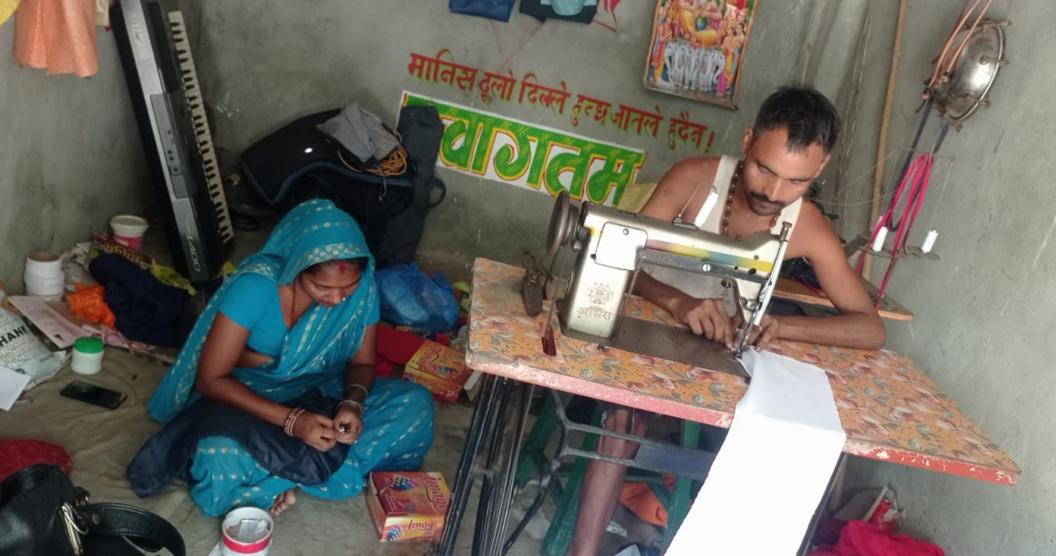
The transformation in Ramsakhi and Mahesh’s relationship is a powerful example of how changing social norms, engaging men and promoting shared financial responsibility can lead to stronger families and thriving communities.
Through the GALS approach, Mahesh not only became a better husband and father but also an advocate for positive change—demonstrating that when men actively participate in household and financial management, the entire family benefits.
Their story proves that empowerment is not just about women stepping up—it’s about men stepping forward to stand beside them.