Image


In the hills of Kabavomo village, situated in Rwanda’s Nyaruguru district, Ntakirutimana Verene, a mother of three children, and partner to Innocent Uwizeyimana, radiates as a prime example of the positive transformation that follows determination, innovation and resilience.
Three years ago, Verene, like many other women in her community, was struggling to make ends meet, relying on small-scale farming for the sustenance of her family, coupled with the weight of limiting societal expectations placed on women.
One day, while on her routine journey to fetch water, she caught wind of an opportunity that had the potential to shift the trajectory of her future. This was the introduction of the Joint Programme on Rural Women’s Economic Empowerment (JP RWEE) in Busanze Sector, Nyaruguru District, jointly implemented by FAO, IFAD, UN Women and WFP.
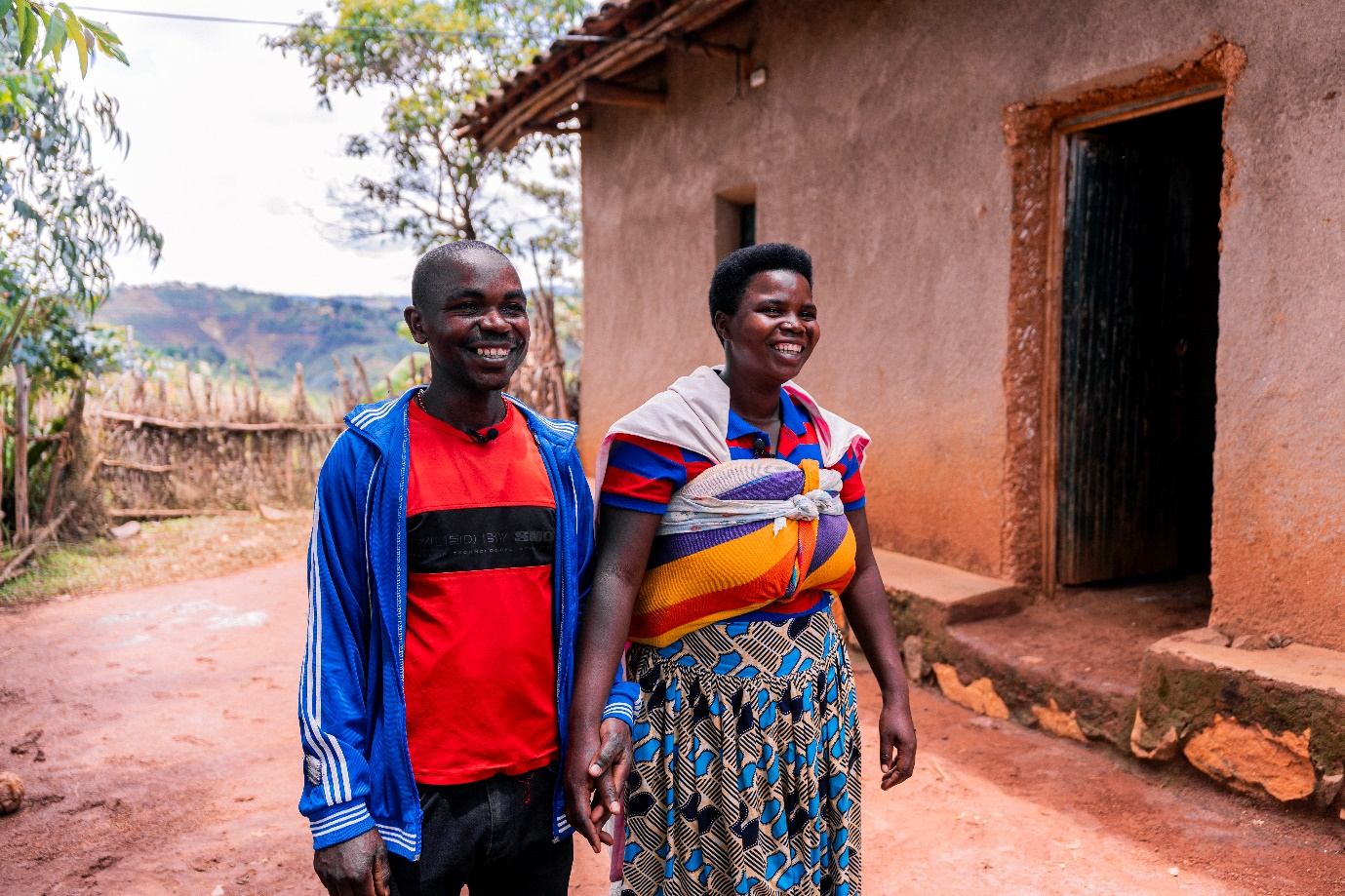
“When the local authorities called upon all women in the first and second wealth rankings, I didn’t know what to expect, but something told me to go and find out.” Verene recalls. “I rushed home to tell my husband. He was hesitant at first but eventually agreed that I attend.”
With the introduction of the JP RWEE, Verene was selected as one of the participants, and to her surprise, was later elected as the leader of the newly enrolled group of women. However, her nomination didn’t come without resistance. “When I shared the news with my husband, I was met with scepticism and was asked to quit. He thought it was a waste of time. I spent the entire night in tears, trying to convince him that this was a valuable opportunity to transform our lives.” Despite the turbulent evening, her efforts eventually paid off, as her husband agreed to her participation in the programme. That decision became a turning point in their lives.
With initial training from the JP RWEE on financial literacy, Verene joined a savings group. After acquiring a loan of Rwf 20,000 (approx. USD 14), complemented with her own Rwf 10,000 (approx. USD 7), she bought 50 kgs of sorghum. From it, she brewed a local drink and sold it for a profit, which she then used to buy a piglet. After some time, the pig birthed eight more piglets, whose sale earned her enough to purchase a cow.
“My husband began to see the difference,” she says proudly. “He saw that this programme was bringing real change.” With her brewing business accumulating profits of up to Rwf 120,000 (approx. USD 83) in a short period, Verene was able to purchase a second cow.
Despite rapid progress, her journey wasn’t without obstacles. A rented space for her business presented challenges when the landlord demanded a year’s rent up front. Instead of stepping back, Verene and her husband saw this challenge as an opportunity, and made the bold decision to sell their cows to purchase a new house for themselves. For the first time, they had a permanent place for their business.
Soon after, the JP RWEE presented Verene with another transformative opportunity. Verene was selected to take part in a study tour to Ngoma District. There, she learned about the maize value chain from other successful women entrepreneurs who were part of the first phase of the Joint Programme.
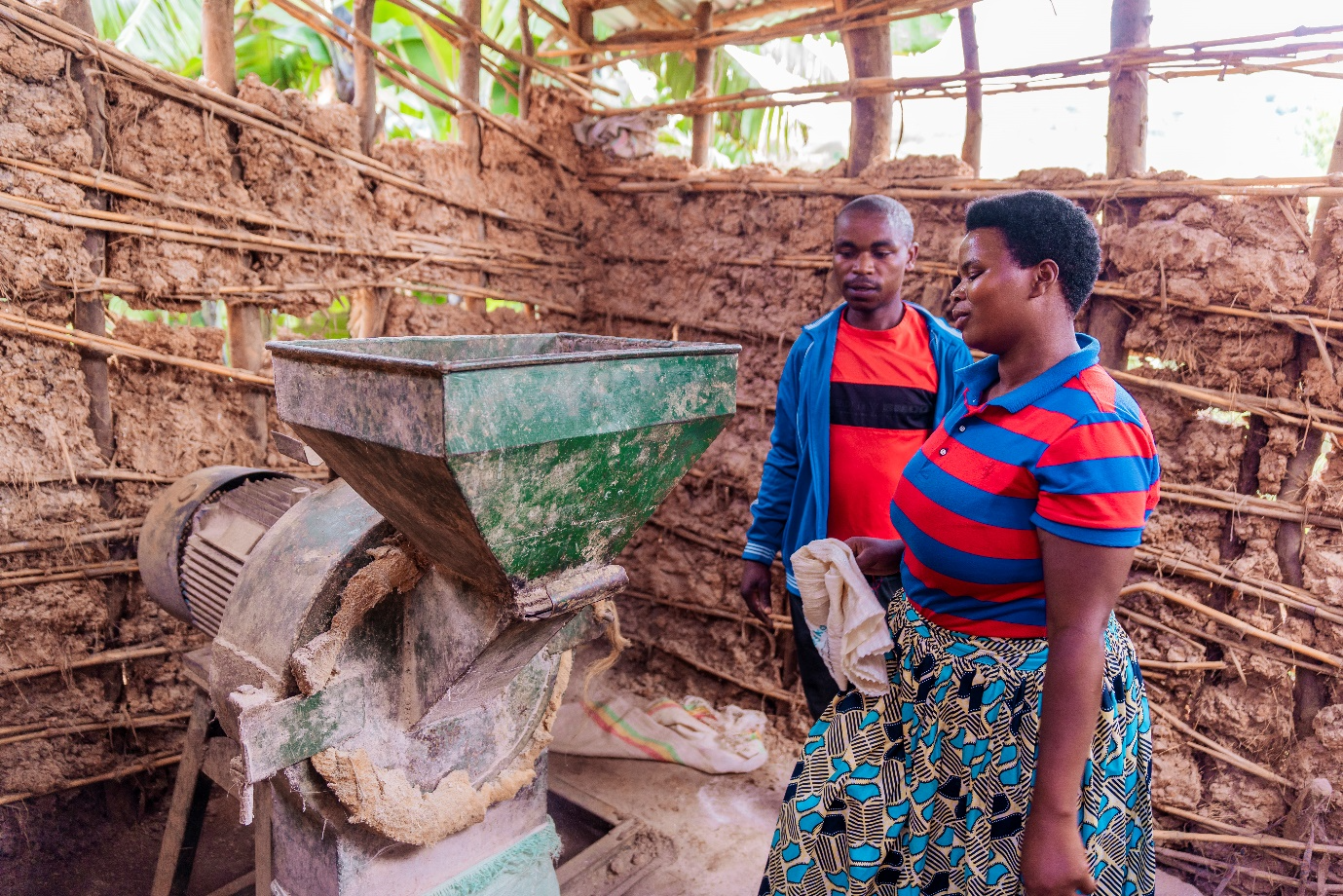
“Inspired by their success, when I came back, my husband and I decided to sell our animals and buy a maize milling machine. We started with just 50 kg of maize. Now we sell flour to the community and with these profits, are able to meet all our household expenses. We were even able to buy more livestock” she recounts.
Through the Farmer Field Life Schools model (FFLS), Verene learned climate-resilient agricultural practices. At first, community members mocked her for closely monitoring her crops. “They laughed at us for counting leaves. However, that all stopped when we harvested over 300 kg of beans and 200 kg of maize, all on the same plot of land that once gave us just 50 kg!” exclaimed Verene.
Even simple changes brought meaningful relief. Improved cookstoves distributed through the programme transformed her daily routine. “I used to rush home to cook early to be able to attend community meetings. Other times I wouldn’t be back in time to cook dinner, and that caused arguments at home,” she reflects. “Now, food stays warm, and I can support my family while participating fully in economic and social activities, including leadership of our cooperative.”
One of the most profound changes has been the transformation of her household dynamics. The trainings on gender equality delivered through the programme helped Verene and her husband build a relationship based on respect and partnership. “Today, we talk more, we make decisions together. We trust each other. Before, he didn’t see me as an equal. Now we build everything together.”
As word of their success spread, the once sceptical members of her community began to take notice. “People now come to us for advice. They want to know how we managed to make such major progress across all areas of our life, from our business to our household”, Verene says proudly.
Though her journey was faced with multiple challenges, Verene’s determination, resilience, and the support from JP RWEE turned her challenges into stepping stones for sustainable socio-economic progress. Thanks to her commendable progress and achievements, Verene now serves as a role model for other women and families, providing a proven benchmark for rural women’s empowerment and their vital role in developing resilient and prosperous communities.